
If you’ve just injured your eye, the first steps are simple: do not rub the eye, do not try to remove anything stuck in it, and rinse with clean water only if a chemical is involved. Then have the injury assessed by an eye care professional as soon as possible. Even injuries that seem minor can affect deeper structures of the eye, and some of the most serious problems, like a retinal tear or internal bleeding, are not visible from the outside. When in doubt, get it checked. A quick visit to an optometrist near you can be the difference between a full recovery and lasting vision damage.
In this guide, we’ll walk through the most common types of eye injuries, the symptoms that should never be ignored, what treatment usually looks like, and how to know when it’s time to seek professional care in Richmond Hill or Bolton.
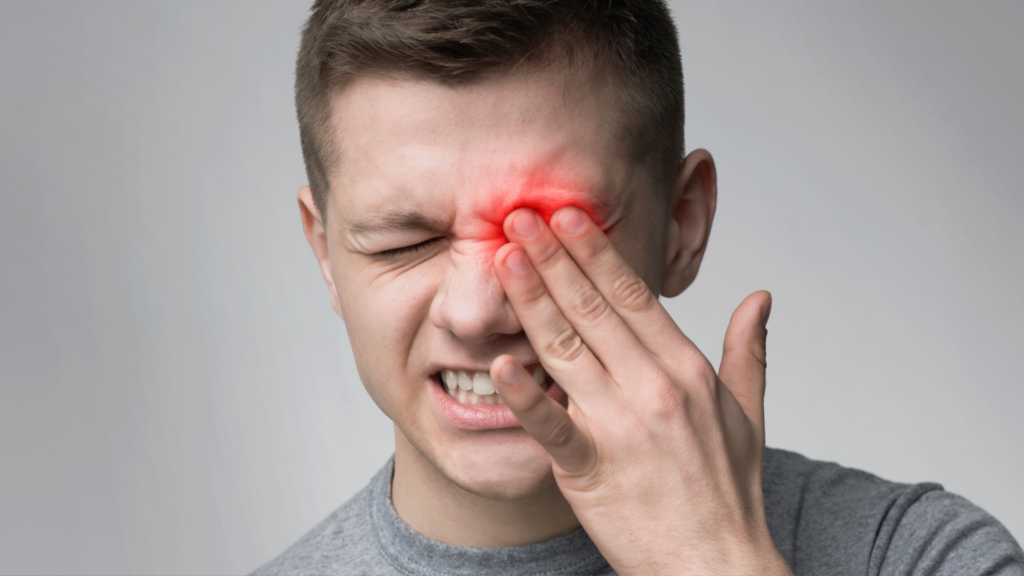
Common Types of Eye Injuries
Eye injuries happen in everyday situations far more often than most people expect. Cooking, cleaning, yard work, sports, and home renovation projects are all frequent causes. Here are the injuries optometrists see most often:
Corneal abrasions. A scratch on the clear front surface of the eye, usually caused by a fingernail, tree branch, makeup brush, or a particle of dust or sand. Abrasions are painful and can make the eye feel like something is still stuck in it, even after the object is gone.
Foreign objects in the eye. Dust, metal shavings, wood particles, and grit can lodge on the surface of the eye or under the eyelid. Metal fragments are especially concerning because they can begin to rust on the eye’s surface within hours.
Chemical exposure. Household cleaners, garden chemicals, and workplace substances can burn the surface of the eye. Alkali chemicals, found in products like oven cleaners and drain openers, are particularly damaging because they continue to penetrate eye tissue until fully rinsed away.
Blunt trauma. A ball, elbow, airbag, or fall can bruise the eye and the tissue around it. Beyond the visible black eye, blunt force can cause bleeding inside the eye, damage to the iris or lens, and in some cases a retinal detachment.
Penetrating injuries. Any object that cuts or enters the eye is a medical emergency. This includes injuries from glass, metal, knives, or high-speed debris from power tools.
First Aid: What to Do Right After the Injury
What you do in the first few minutes matters. Follow these steps based on the type of injury:
If a chemical splashed into your eye: Flush the eye immediately with clean water or saline for at least 15 to 20 minutes. Hold the eyelid open and let the water run across the eye. Remove contact lenses if they don’t rinse out on their own. Seek professional care right away, even if the eye feels better after rinsing.
If something small is in your eye: Blink several times and let your natural tears work. You can rinse gently with clean water or saline. Do not rub the eye, and do not use tweezers, cotton swabs, or fingers to dig at the surface.
If an object is embedded in the eye: Do not remove it. Do not apply pressure. If possible, cover the eye loosely with a rigid shield, such as the bottom of a paper cup taped in place, and get emergency care immediately.
If you took a hit to the eye: Apply a cold compress gently to the area around the eye to reduce swelling, but do not press on the eyeball itself. Watch closely for vision changes, and have the eye examined even if it looks fine, since internal damage is not always obvious.
Symptoms That Mean You Need Care Right Away
Some symptoms after an eye injury signal a problem that needs urgent attention. Contact a vision doctor near you promptly, or go to the nearest emergency department, if you notice any of the following:
- Sudden blurred vision, double vision, or partial loss of vision
- Persistent or worsening eye pain
- Blood visible in the clear part of the eye
- A pupil that looks irregular in shape or does not react to light
- New flashes of light or a sudden increase in floaters
- A dark shadow or curtain moving across your field of vision
- Sensitivity to light that does not improve
- A feeling that something is in the eye that won’t go away
- Any cut or puncture to the eye or eyelid
Flashes, new floaters, and shadowed vision after trauma are especially important because they can indicate a retinal tear or detachment. A detached retina can lead to permanent vision loss if it isn’t treated quickly.
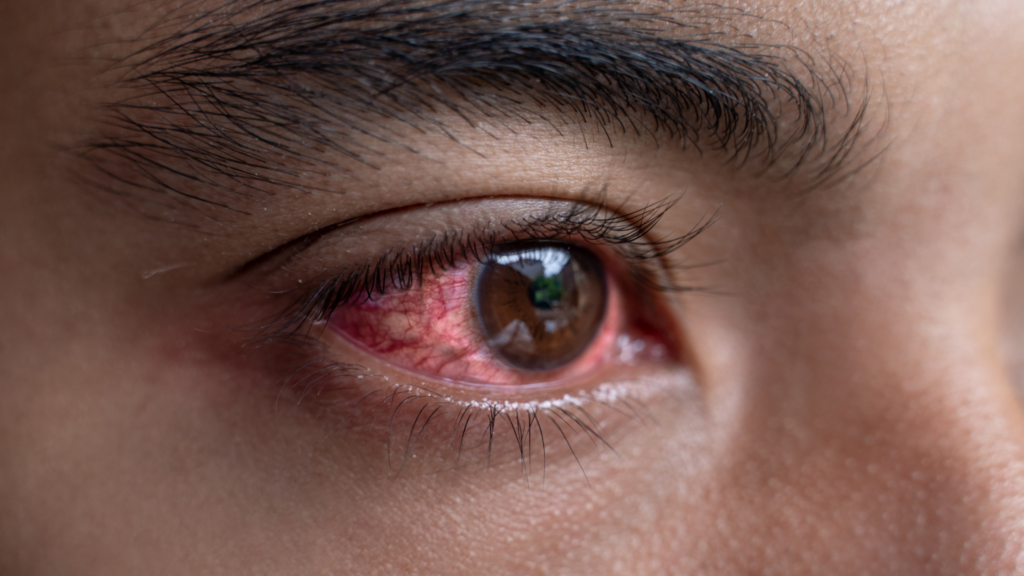
How Eye Injuries Are Treated
Treatment depends entirely on the type and severity of the injury, which is why a proper examination matters so much. During your visit, your optometrist will examine the surface of the eye under magnification, check your vision, and assess the internal structures of the eye when needed.
Common treatments include:
- Lubricating drops or ointments to keep the eye comfortable while a minor abrasion heals
- Antibiotic drops to prevent infection in a scratched or irritated eye
- Foreign body removal using specialized instruments under magnification
- Follow-up monitoring for blunt trauma, to make sure no delayed complications develop
- Urgent referral to an ophthalmologist for injuries that require surgical care, such as penetrating wounds or retinal detachment
Most corneal abrasions heal within a few days when treated properly. The bigger risk comes from untreated injuries, where infection, scarring, or unnoticed internal damage can cause problems that last far longer than the original injury.
Why You Shouldn’t Wait and See
Many people wait a day or two after an eye injury, hoping the discomfort will pass on its own. The problem with waiting is that pain is not a reliable measure of how serious an eye injury is. A tiny metal fragment can start rusting on the cornea while causing only mild irritation. Internal bleeding after blunt trauma can raise pressure inside the eye without dramatic symptoms at first. And a small retinal tear may cause nothing more than a few new floaters before it progresses.
Searching for an optometrist near you and booking a same-day or next-day assessment is a small step that protects something you rely on every waking moment. Your sight is worth the visit.
Eye Injury Care in Richmond Hill and Bolton
IndividualEyes provides eye care for patients across Richmond Hill and Bolton. If you or a family member has injured an eye, our team can assess the damage, provide treatment, and refer you for specialized care if it’s needed. We also provide guidance on protective eyewear for sports, home projects, and workplaces, which remains the most effective way to prevent eye injuries in the first place.
Don’t take chances with your vision. If you’ve experienced an eye injury, contact IndividualEyes today to book an assessment at our Richmond Hill or Bolton location. Our team is here to help you protect your sight.
Frequently Asked Questions
How do I know if my eye injury is serious?
Any vision change, persistent pain, visible blood in the eye, light sensitivity, or new flashes and floaters after an injury is a sign the injury may be serious and needs prompt professional care. Injuries that look minor on the outside can still involve deeper structures of the eye, so if symptoms last more than a few hours or get worse, have the eye examined by a vision doctor near you rather than waiting it out.
Should I go to the emergency room or an optometrist for an eye injury?
For cuts or punctures to the eye, embedded objects, chemical burns, or sudden vision loss, go to the nearest emergency department immediately. For most other injuries, including scratches, foreign particles, irritation, and blunt trauma without severe symptoms, an optometrist can assess and treat the eye, often faster than an emergency room visit. If you’re unsure, call our Richmond Hill or Bolton office and our team can help direct you to the right level of care.
Can a scratched eye heal on its own?
Minor corneal abrasions often heal within 24 to 72 hours, but they should still be examined because scratches can become infected or hide a deeper problem. An optometrist can confirm the scratch is superficial, remove any remaining particles, and prescribe drops that reduce infection risk and keep you comfortable while the eye heals.