
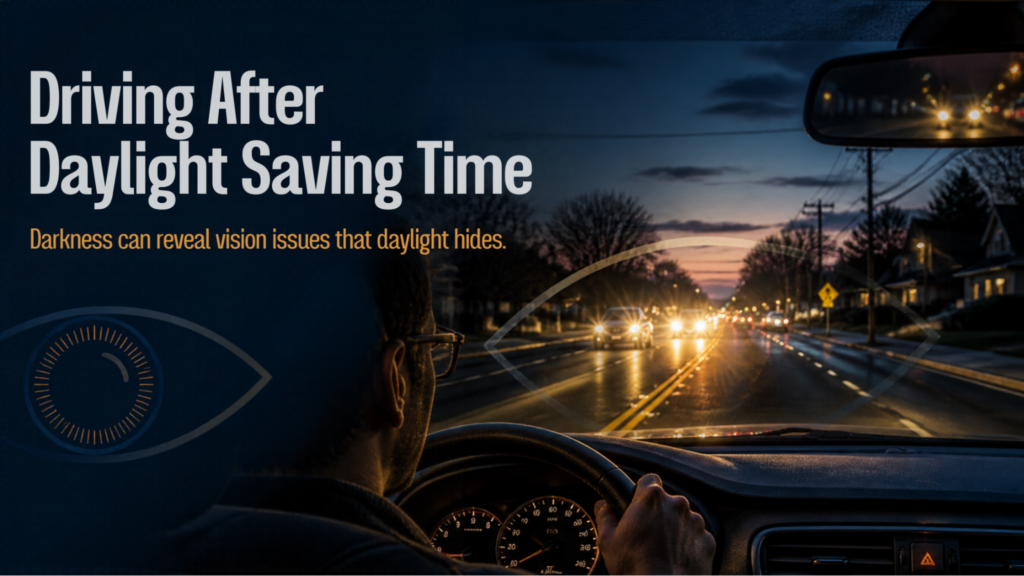
If your drive home has suddenly felt harder since the clocks fell back, you’re not imagining it. Once daylight saving time ends in early November, the evening commute moves into darkness. That shift exposes vision issues that are easy to miss in daylight, such as an outdated prescription, dry eyes, glare sensitivity, or early changes inside the eye.
Here’s what’s happening, what you can do about it, and when it’s worth booking an eye exam.
What Changes When the Clocks Fall Back
Your eyes don’t change overnight, but your driving conditions do. By mid-November, the sun sets around 5 p.m. in Richmond Hill and Bolton, so many people now spend most of their drive home in dusk or full darkness.
The time change can also throw off your sleep for several days. Tired eyes and a tired brain make it harder to focus, judge distances, and react quickly on dark roads.
Why Your Eyes Struggle in the Dark
Your eyes switch to low light mode
In daylight, the cone cells in your retina handle sharp detail and colour. In dim light, rod cells take over. Rods are very sensitive to light, but they provide less detail, weaker colour, and poorer contrast and depth perception. Dusk can be especially tricky because neither system is working at its best.
Wider pupils, softer focus
Your pupils widen in the dark to let in more light. This also exposes more of the eye’s natural optical imperfections, and some people become slightly more nearsighted at night, a condition called night myopia. A small prescription change you barely notice during the day can make road signs and lane markings look blurry after dark.
Glare, halos and starbursts from headlights
Bright LED headlights, uncorrected astigmatism, scratched lenses and a dirty windshield all scatter light. The result is glare, halos or starburst patterns around lights. If bright light bothers you during the day as well, our article on light sensitivity and photophobia explains common causes.
Dry eyes from heaters and vents
Car heaters, dry winter air and vents blowing toward your face all evaporate your tears. When the tear film becomes uneven, vision blurs and glare gets worse. You also blink less when concentrating on the road. If your eyes often feel gritty, tired or watery, dry eye therapy can help. Long screen days before your commute can add to the strain, which is why digital eye strain and night driving complaints often go together.
Age-related changes and eye conditions
With age, pupils get smaller, and the eye’s natural lens becomes less clear. Older drivers need more light to see well and take longer to recover after facing oncoming headlights. Cataracts are one of the most common causes of worsening glare at night. Glaucoma and diabetic eye disease can also reduce contrast and side vision. Eye disease diagnosis and management and regular diabetic eye exams help catch these changes early.
Tips for Safer Night Driving This Season
- Keep your prescription current. Even a small update can sharpen your vision at night. Adult and senior eye exams check how well you see in different conditions.
- Choose anti-reflective lenses. An anti-reflective coating reduces reflections and glare from headlights and streetlights. Ask about options when choosing frames and lenses.
- Skip yellow-tinted “night driving” glasses. They can make things feel brighter, but they reduce the total light reaching your eyes, which is not what you need in the dark.
- Clean your windshield inside and out. A film on the inside of the glass is a major source of glare. Clean your glasses and headlights regularly too.
- Look toward the right edge of your lane. When headlights approach, shifting your gaze to the right lane marking reduces glare without losing track of the road.
- Dim your dashboard and phone. Bright screens inside the car make it harder for your eyes to adjust to the darkness outside.
- Point vents away from your face. This helps prevent dryness and blurry vision on longer drives.
- Wear sunglasses for low afternoon sun, never at night. The low winter sun before dusk is harsh, and polarized sunglasses help, but remove them once the light fades.
- Give yourself time to adjust. In the first week after the time change, allow extra travel time and avoid driving when drowsy.
When to See an Optometrist Near You
Book an eye exam if you notice any of the following:
- Halos or glare around lights that seem worse than last year
- Trouble reading road signs or seeing lane markings at night
- Taking longer to recover after oncoming headlights pass
- Feeling less confident driving after dark
- It has been more than a year since your last eye exam
Sudden changes, such as new flashes of light, a shower of floaters, a shadow over your vision, or sudden vision loss, need prompt attention. Visit our urgent eye care page or call us right away.
Our optometrists at IndividualEyes in Richmond Hill and Bolton can find out what’s behind your night driving struggles and help you see more clearly on dark roads. Book an appointment online or contact the location nearest you:
- Richmond Hill: 905-787-8686
- Bolton: 905-857-2773
Frequently Asked Questions
Is it normal for night vision to feel worse after the time change?
Yes. The time change doesn’t affect your eyes directly, but it moves more of your driving into darkness. Low light reveals issues that daylight hides, such as an outdated prescription, astigmatism, dry eyes, or early cataracts. If the difficulty continues after the first week or two, book an eye exam.
Do night driving glasses actually work?
Most yellow-tinted night driving glasses don’t improve night vision. They may make things look brighter, but they reduce the amount of light reaching your eyes. An up-to-date prescription with an anti-reflective coating is a more effective way to cut glare from headlights.
Can an eye exam help with night driving problems?
Yes. A comprehensive eye exam checks your prescription, screens for astigmatism, dry eye, cataracts, and other eye conditions, and looks at how your eyes handle glare. Your optometrist can then recommend the right lenses, treatment or follow-up care for safer driving after dark.